
Success Without Burnout: The New Definition of Performance
- Catherine Manin
- Apr 7
- 4 min read

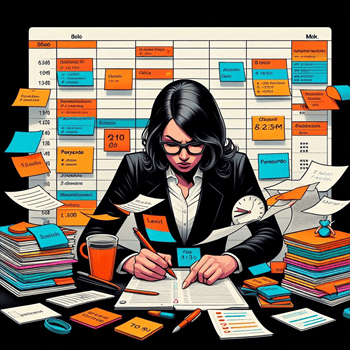
Does your calendar look like every single minute is booked?
Do you measure a “good day” by how many tasks you cross off your to-do list?
For years, we were taught a simple rule: work hard, and you will succeed.
The more you do, the faster you deliver, and the more available you are, the more valuable you become.
But many of us are discovering the hidden cost of this rule.
It creates constant pressure, mental overload, and a feeling that you are never doing enough.
This path doesn’t lead to success. It leads to burnout.
The problem isn’t your work ethic.
The problem is an outdated definition of performance.
It’s time for a new one—one that lets you achieve your goals without sacrificing your well-being.
True performance isn’t about how much you can do in a sprint;
it’s about how consistently you can perform over the long journey.

The Myth of “More” – Why the Old Model Is Broken
The modern workplace has a deep-rooted belief: busyness equals importance.
We wear exhaustion like a badge of honor. We answer emails late at night to show dedication. We skip breaks to prove commitment. We believe top performers must constantly push their limits.
This is a dangerous myth.
It treats energy, creativity, and focus like infinite resources.
They are not.
Operating from stress and urgency does not make you perform better—it narrows your thinking and locks you into reactive decisions.
Creativity suffers, and short-term wins come at the cost of long-term potential.
Think about it this way: when your phone’s battery is at 5%, it goes into low-power mode. Apps run slower, the screen dims, and non-essential functions shut down.
The human brain works the same way.
When your energy is depleted, the quality of your thinking, your problem-solving skills, and your emotional intelligence all decrease.
Constant urgency is a recipe for low-quality work, not high performance. This isn't success; it's a cycle of exhaustion that slowly drains your motivation and joy. |

The Real Definition of Performance
So, if the old model is broken, what is the alternative?
The new definition of performance shifts the focus from output to sustainable impact.
It’s not about doing more; it’s about doing what matters—and doing it well, consistently, without burning out.
This requires a fundamental mindset shift from managing your time to managing your energy.
Your energy is your most precious professional asset. Protecting it creates sustainable success.
Three Core Principles:
Clarity Over Quantity
High performers are not the people who do the most tasks.
They are the people who have the clarity to focus on the right tasks.
Instead of reacting to every email and request, they pause and ask, “Is this the most important use of my energy right now?”
They make conscious decisions from a place of focus, not from a place of stress.
Rhythms Over Sprints
The old model encourages us to sprint constantly.
But no one can sprint forever. Sustainable performance is built on rhythms—cycles of focused work followed by intentional rest and recovery.
This isn't about being lazy; it’s about being intentional.
Just as an athlete needs recovery days to build strength, you need breaks to restore your mental energy.
This could be a 10-minute walk between meetings, protecting your lunch break, or fully disconnecting in the evenings.
These rhythms allow you to show up focused and energized, day after day.
Well-being as a Foundation, Not a Reward
Burnout culture treats well-being as something you earn after you’ve pushed yourself to the limit—a vacation after a stressful project, a weekend to recover from a 60-hour week.
The new model understands that well-being is the foundation of great work.
When you are rested, clear, and mentally grounded, you produce better results. Your decisions are wiser, your creativity flows, and your resilience grows.
This isn’t about doing less; it’s about creating a work approach that supports you, so you can continue achieving meaningful results for years to come. |

Your System for Freedom – Using Intentional Tech to Rewire Your Work
Redefining performance is not just a mental exercise.
It requires building new systems that support your energy and focus.
This is where we can use technology, especially AI, in a more intentional and empowering way.
For too long, technology has been used to increase our workload.
More notifications, more platforms, more ways for people to reach us at all hours.
But we can flip this script.
We can use technology to create freedom, not to add pressure.
AI can remove tasks that drain your energy:
Sorting crowded inboxes
Summarizing reports or meeting transcripts
Drafting standard emails
Organizing data or scheduling
These tasks are necessary but low-value.
When you automate or delegate these draining tasks, you create space.
You free up mental energy for the work that truly matters: strategic thinking, creative problem-solving, and meaningful collaboration with your team.
You can finally block off time for deep work without feeling guilty about the small administrative tasks piling up.
This is how we use technology to support our well-being, not just our productivity. It becomes a system that protects your focus and frees you from the noise, allowing you to operate from that clear, grounded state where your best work happens. |

Your Success, Sustained
For too long, we have accepted burnout as the price of ambition.
But you do not have to choose between achievement and well-being.
A new, more human-centered vision for success is possible.
It starts with rejecting the idea that your value is measured by how busy you are.
Real performance is about consistency, clarity, and the ability to bring your best self to your work without exhausting your spirit.
It’s about building rhythms that energize you and using systems that free you.
Because success is not about how much you can handle.
It’s about how well you can sustain it—while still feeling clear, focused, and in control.


Comments